Both Trinidad and Tobago abound with birds and at almost
every turn an avian spectacle can be observed. There are however certain
places that are particularly noteworthy for either the diversity or abundance of birds.
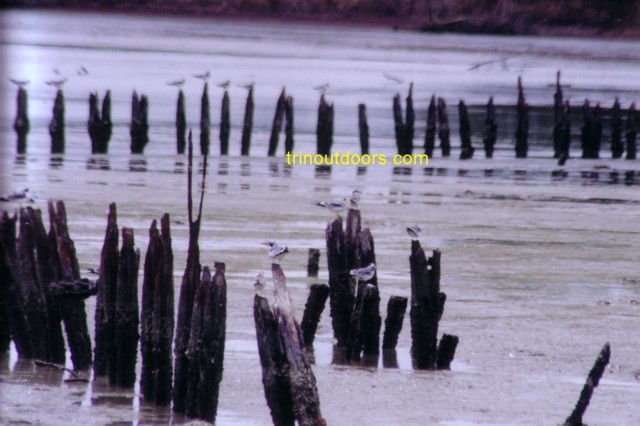
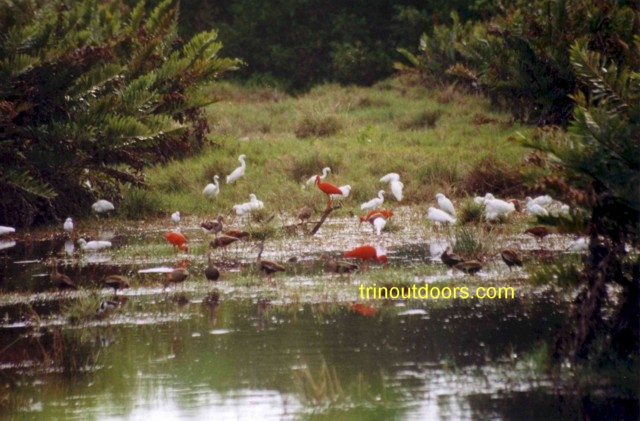
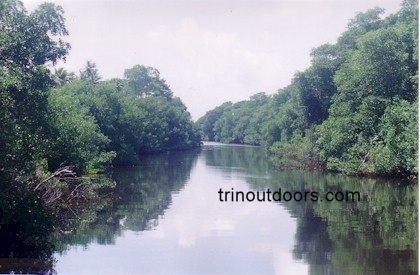
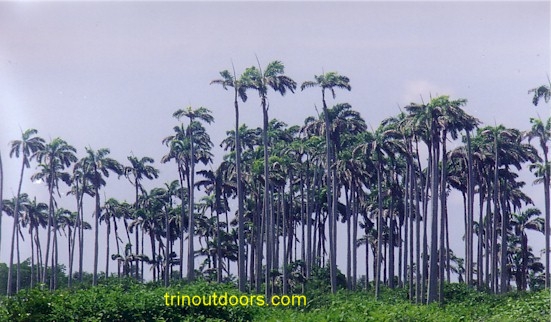
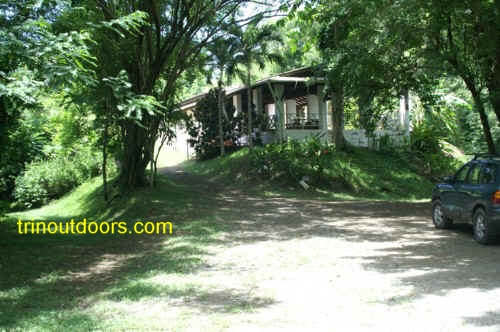
Below are photographs of a few of those birding hotspots and a synopsis of the information
on birding hotspots that is provided on the bird identification CD, Discovering the Birds of Trinidad and Tobago.
Mount St.
Catherine is a birding hotspot with a wide variety of bird life. At times it
is possible to see Green-rumped Parrotlets (parakeets) at the very start of
the walk, while along the way you may spot Trogons, Toucans, Turquoise and
Blue-headed Tanagers, Blue Dacnis. An interesting side trip is the trail
into Crestt Lands (Center for the Rescue of Endangered Species of Trinidad
and Tobago) that is on a bend on the left and is reached after approximately
15 minutes walking. This trail is approximately 0.5 miles long and venturing
into this area where the forest presses closer in can sometimes give you the
opportunity to see the Squirrel Cuckoo and Blue-crowned Motmots and almost
always allows you to see a Ruby Topaz Hummingbird. In the evenings
Orange-Winged Parrots are easily visible overhead. You
can learn more about Mt St
Catherine on our Other Places of Interest Page.
Located on the western outskirts of Port of Spain, these mudflats are easily accessible
being alongside the Audrey Jeffers Highway. The mudflats are fronted by the Gulf of Paria,
backed by mangrove swamps and bisected by a river. Many of the migratory birds that visit
Trinidad can be seen in this area, including Whimbrel, Fork-tailed Flycatcher,
Black-necked Stilt, Greater Yellowlegs, Hudsonian Godwit, Snowy Plover, Semi-palmated
Plover, White-rumped Sandpiper. Another good birdwatching area that is close by is the Maraval River Estuary.
Mucurapo Mudflats, Port of Spain
Birdwatching_at_the_Mouth_of_the_Maraval_River
On hearing the name Maraval River most individuals
will think of the Maraval Valley and the river does flow through the valley. Most persons
however do not realise that after the Maraval valley, the river continues along the edge
of St James and through Woodbrook flowing along the side of the Hasely Crawford stadium to
eventually empty into the Gulf of Paria at Mucarapo Bay next to the Marriott Hotel. While
many will not think of the Maraval River as entering the sea at Mucarapo even less will
think of it as a birdwatching location. Yet the mouth of the Maraval River is a good
birding spot for a short birdwatching trip.
The river flows under the Audrey Jeffers highway and through a short stretch of
mangrove before arriving at the sea. As the river water encounters the ocean it loses its
force and spreads out depositing soil to create mud flats. It is this mixture of mud and
water that creates the habitat loved by some bird species.
At the end of the river, bamboo
stools brought down the river in times of flood have lodged themselves. On these stools
the neotropic cormorant, which visit between December and August, perch to spot the fish
before diving and afterwards come to spread their wings to dry.
At the river mouth a shifting tidal
bar creates a shallow lagoon and slowly foraging in the lagoon can be seen Whimbrels and
Willets. These winter visitors slowly move through the water, at times standing motionless
as they scan the water for their prey. On the tidal bar in the afternoons you can see
large groups of laughing gulls while on the mud of the river bank collared plovers and
semipalmated plovers pick their way.
Just back from the river bank a fine
white grey sand forms a border between the mud of the river bank and the grasses inland.
In this area are stranded pools where resident black necked stilts stalk. Sometimes
sticking their head completely under the water at other times swiping their head and bill
through the water. Standing still as you approach and as you cross an invisible line
flying off with their alarm sounds.
At the
edges of the mangrove the fork-tailed flycatchers dart from the branches to capture
insects. These visitors to Trinidad and Tobago from southern South America are seen
between May and October. After spending their days in the foothills of the Northern Range
they return to roost in the mangrove in the evenings and actively hunt insects before
night falls.
This entire
area is relatively undisturbed by man except for the detritus of human life in the form of
plastic bottles and containers washed down the river and now littering its banks. At
sunset the light glitters gold off the water while birds hurriedly catch their last meal
before the night or dry their wings in the dying rays of the sun, while across the water
the towers of Westmoorings and Cocorite gaze unseeingly.
The lower reaches of the Diego Martin River may be considered
by some as an unlikely place for bird watching especially as the enclosing of the river
with concrete cause many to think of it simply as a large drain. However it is a river and
wherever there is flowing water there will usually be birds and the Diego Martin River is
no exception.
The lower reaches of the Diego Martin River has a constantly
changing profile. Silt is continuously brought down by the river however, as this is the
last stretch before the river enters the sea, the water loses its force and the silt tends
to be deposited in this area. The depositing of this silt creates areas where pools exist
throughout becoming home for small fish and crabs. In addition the silt creates mounds
providing high spots above the water that are used by various species to spot prey. The
silt also traps tree branches and bamboo stools providing other perching areas for various
types of birds. Periodically the Regional Corporation will remove all the silt from the
river which causes its profile to change again. This regularly changing profile causes the
bird species seen in the area to change.
One of the species that is often seen in this area, but not
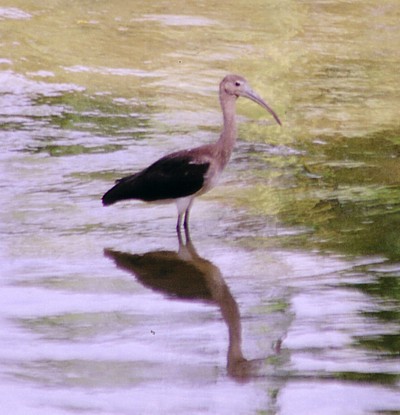
recognised by most, is the Scarlet Ibis. Most people do not realise that the Scarlet Ibis
frequent this area because they are juvenile Scarlet Ibis. The common image of a Scarlet
Ibis is of a bright red bird but immature birds differ significantly from adults. Young
Scarlet Ibis are gray brown on the upperparts with a white rump. The head, neck and chest
are light brown with some white streaking. The lower underparts are white. The bill and
legs vary from dusky to pink. As the immature age, they begin to show pink on the various
parts of the body as they consume more crustaceans eventually acquiring the scarlet
plumage with which they are associated.
Apart from Scarlet Ibis, there is a wide variety of water
birds that can be seen in this area at varying times. Picking among the mud can sometimes
be seen Yellow Crowned Night Herons, Little Blue Herons, Tri-coloured Herons, Green
Herons, Lesser Yellowlegs and Willets while Pied Water Tyrants perch on the trunks stuck
in the mud and Western Sandpipers dart along the concrete. On the eastern bank and
sometimes on the river’s edge, Great Egrets may be seen wading through the water.
The best location from bird watching in this area is along
the western bank between Morne Coco Road and the Western Main Road. Along most of this
area there is a park like atmosphere with cut lawns, flamboyant trees and coconut palms.
Caracara are sometimes seen flying over and along the last stretch of the river before the
sea and osprey can occasionally be seen patrolling above the water.
Blanchissuesse is both a popular vacation area and birding
hotspot. The mountains that tower above the village are clothed in verdant natural forest
and so avian delights appear at every bend. While throughout the village you can indulge
in birdwatching, at times just from your verandah, the western end of the village provides
the best viewing. Along the banks of the Marianne River freshwater species may be
observed. As you continue along the road past the spring bridge other species appear,
especially those that frequent forest edges and areas with scattered trees. The
Blanchissuese to Arima Road over the mountains is another good area especially for getting
views of forest species. Along this road if you walk slowly and look in the underbrush you
will get the opportunity to observe those species that frequent the underbrush.
The Abbey
at Mount St Benedict sits on a 600 acre private reserve where the
slopes are covered with lush lowland forest. There are various
trails through the forest that are favored for
birdwatching
as a variety of species can be seen that include hawks, pigeons,
hummingbirds, orioles, mockingbirds. A colony of Oilbirds nests in a
cave on the property. You can learn more about
Mount St Benedict on
our Religious Sites Page.
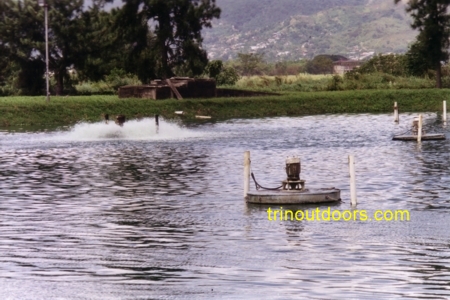
The Trincity Sewerage Treatment Ponds are located kilometer from Piarco Airport and
meters off the Churchill-Roosevelt Highway, opposite Trincity Mall. When first thought of,
the name does not encourage visiting but the area teems with birdlife. It is a small
compound that can literally all be seen from one spot. It is easy to walk around and the
bird views are excellent because you are on raised embankments looking down a few feet
into the ponds. While Yellow hooded Blackbirds can be seen in most swamps and marsh areas
in Trinidad, at Trincity it is a photographer’s delight because of the close
proximity and the ability to have the bird contrasted against a strong background. The
birdlife that can usually be seen at these ponds include: Least Grebe, Little Blue and
Striated Herons, Great Egret, Cattle Egret and Snowy Egret, Yellow hooded
Blackbirds, Shiny Cowbirds, Yellow Oriole and wintering and migrating American
shorebirds, Lesser and Greater Yellowlegs, Spotted Sandpiper and Black-necked Stilts.
Occasionally Ringed Kingfisher and Masked Duck are seen. Trincity is one area, where you
are almost always certain to see a Yellow-billed Tern.
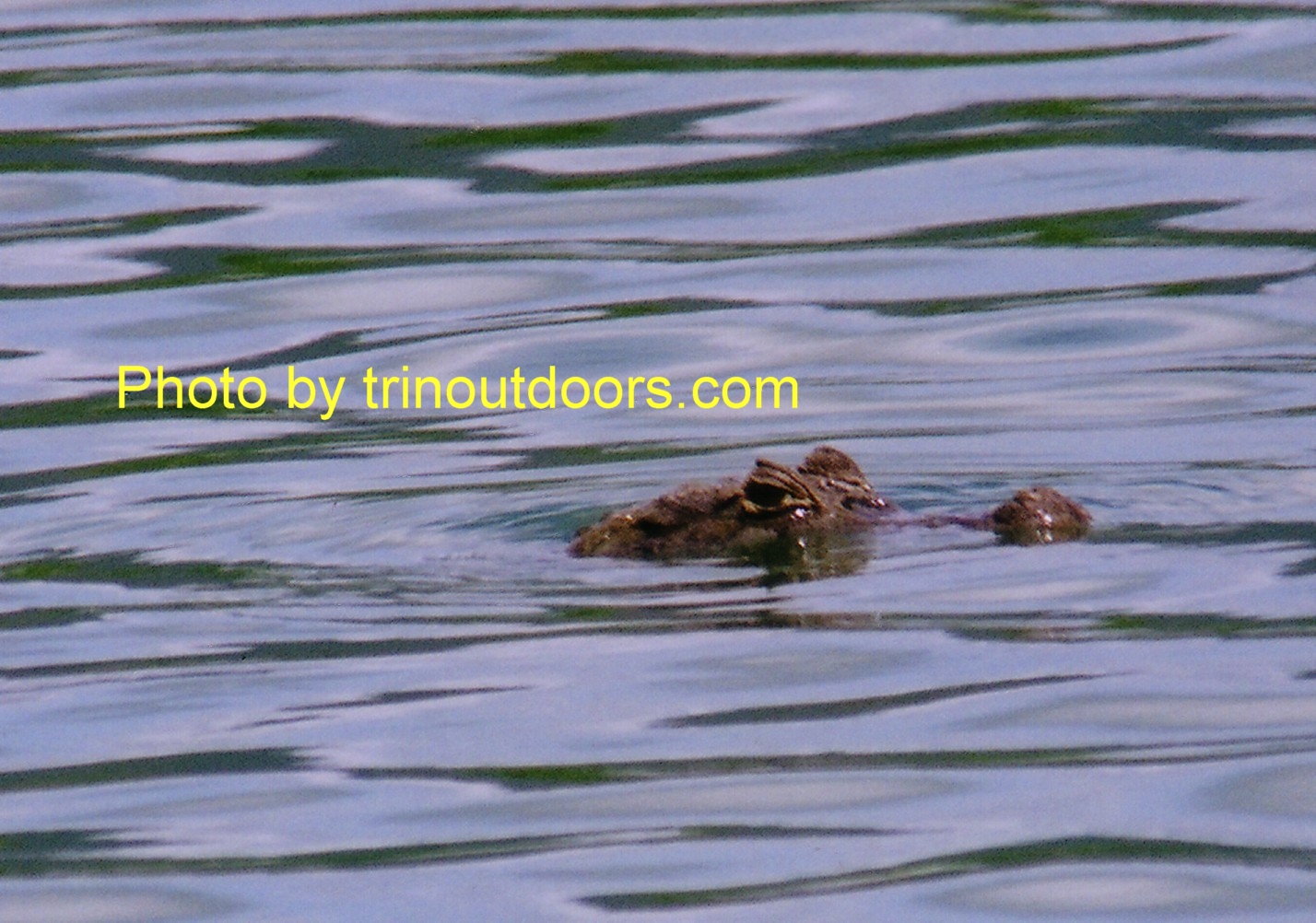
In addition to birds, if you are lucky you can see the caimans that sometimes bask on the embankments. When venturing
near the edges of the ponds be alert for caimans in the water, only their nostrils and
eyes will be visible above the water.
There is no charge for entering this area. Trincity is not an extended
viewing experience because of its small size and so can be combined with visits to other
hotspots or other activities.
Trinidad is blessed by having a variety of hummingbirds resident or visiting
its shores. Indeed 17 species of hummingbirds are found in Trinidad and
Tobago. Most individuals in Trinidad who have flowering plants in their
garden will usually see a hummingbird making its rounds through their garden
either in the mornings or evenings visiting the flowers to gather nectar.
The most common of these is the Copper-Rumped Hummingbird and the viewer
usually experiences a moment of joy to see this small bird as it flits from
flower to flower then hovers over each flower drawing the small amounts of
nectar. Hummingbirds can fly right, left, up, down, upside down or backwards
and in fact are the only birds that can fly backwards. If the sun is shining
brightly there is also the visual beauty of the glow of the iridescent
colors of the feathers, an intensity of color that no human hand can
replicate.
Tucked away in the residential area of Valley View, Maracas St Joseph, Theo
and Gloria Ferguson have created a hummingbird heaven that they have named
Yerette. The name is an Amerindian word for hummingbird and is truly an apt
one. At Yerette one can see 13 of the 17 species of hummingbirds found in
Trinidad and Tobago. So that you can see species like the White-chested
Emerald and Ruby Topaz which are species that inhabit forest edges, the
Black-throated Mango which inhabits gardens, the Green-throated Mango which
is usually found in Mangrove Swamps, the Brown Violetear that is normally
seen at high mountain elevations. However the amazing thing about Yerette is
not just the wide variety of species but the almost overwhelming number of
birds. During a visit one can easily see between 200 to 300 hundred
hummingbirds while Theo Ferguson estimates that during the day between 750
to 3,000 hummingbirds visit his oasis. Indeed there is possibly no other
place in Trinidad and Tobago where one can see such a wide variety and in
such numbers.
This diversity of hummingbirds is in part caused by the fact that there is
natural forest surrounding property and numerous flowering plants in the
garden. It is further enhanced by the numerous hummingbird feeders around
the house, the maintenance of which can consume up to 4 hours each day.
Visitors to Yerette not only get to witness the beauty of these acrobatic
flight wonders but also are able to view an impressive photo show, see the
Yerette photo gallery and purchase hummingbird photographs and craft items.
When visiting Yerette, walk with your camera as you will most certainly want
to try and capture the beauty of these birds. One word of advice have a
camera that allows you to manually set the focus because the speed with
which these aerodynamic marvels of flight move, it can be very difficult for
an auto-focus camera to lock on and capture the image.
Visits to Yerette are by appointment only and you can get the contact
details at www.yerette.com
This research Station is in the eastern part of the island a few kilometers outside of
Arima, along the Eastern Main Road. The Ministry of Agriculture manages it and permission
must be obtained for entry. Permission is usually not difficult to obtain once applied for
in advance between Monday and Friday.
It is an
area of open savannah, wet pastures, hedgerows and isolated trees. The typical birds are
Savannah Hawk, Wattled Jacanas, Green-rumped Parrotlet, Yellow-chinned Spinetail,
White-headed Marsh and Pied Water Tyrants, Grey Kingbird, White-winged Swallow and
Red-breasted Blackbird. Wintering American shorebirds are often found in the wetter areas.
In season: Solitary and Least Sandpipers, Southern Lapwing and Stilt Sandpipers. There is
also a chance of Cocoi Heron, Striped
Cuckoo and Pinnated Bittern. Savannah
Hawks are particularly prevalent in this area and can be seen perched on the fence
posts or on bare tree limbs. Other birds would include Short-tailed Swifts, Forked-tailed
Palm Swifts and Zone-tailed Hawks.
Along the Valencia Old Road shortly after leaving Valencia Junction there
is a road on the northern side called Harper Trace, somewhere along that
road the name changes to San Pablo Trace. It is on San Pablo Trace that one
man has created the San Pablo Hummingbird Retreat.
There are 19 species of hummingbird that can be seen in Trinidad and
Tobago. The San Pablo Hummingbird Retreat claims that 15 of the hummingbird
species visit the retreat, although not all at the same time. The Retreat is
a small place with hummingbird feeders and flowering plants set in a garden
and you can sit on the porch of the building or in the garden and see a
variety of hummingbirds as they visit the feeders or suck the nectar from
the plants. There are often so many hummingbirds flying in the garden that
you can hear the whirring of their wings even before you enter the garden.
One aspect of a visit to the San Pablo Hummingbird Retreat that is
different from other places where hummingbirds are seen is that you can hear
the chirping of these birds. Most people encounter solitary hummingbirds or
maybe get to see a few hummingbirds simultaneously and during these
encounters the birds are silent. As a result many individuals assume that
hummingbirds do not sing. At the San Pablo Hummingbird Retreat that
misconception is laid to rest because these birds chirp constantly. With
some hummingbirds the chirping is a sign of aggression because some species
of hummingbirds are aggressive to other hummingbirds as they seek to protect
their food source. With other hummingbirds the chirping represents a mating
call as they seek to attract mates from among the other hummingbirds in the
garden.
Valencia lies at the foothills of Trinidad's Northern Range mountains and
the area is still largely a rural one with significant areas under
agriculture while other areas are still primary forest. Being in the
foothills the region has large areas that are mainly flat land of savanna
type. This mixture of savanna areas with other areas of rolling topography
and then the hills plus the forest cover is partly responsible for the
variety of hummingbirds seen at the retreat.
Visits to the San Pablo Hummingbird Retreat are by appointment and you
can get the contact details at https://www.facebook.com/sanpabloangels/
One other location in Trinidad that is dedicated to hummingbirds is Yerette,
while in Tobago at Adventure Farm you can also see a proliferation of
hummingbirds.
This is Trinidad and Tobago’s premier birding location and it has been widely
recognized as one of the most successful eco-tourism stories in the world. The listing of
birds that can be seen at this center has been identified in the vicinity of 159. This
Nature Center is located at a height of approximately 1,200 feet in the hills of the
Northern Range, seven miles from the town of Arima. It is reached by driving along the
Arima-Blanchisseuse Road that winds through verdant countryside dotted with small villages
and isolated houses.
Asa Wright is a 270-acre conservatory, located on a former cocoa-coffee-citrus
plantation partly reclaimed by secondary forest and largely surrounded by impressive
rainforest. The center has several cottages that are available for rent and one can choose
to spend a night, a weekend or even longer. There are numerous trails throughout the
property and very knowledgeable guides. The highlight of any visit to Asa Wright is simply
sitting on the verandah and watching or photographing the wide array of birds that come to
the feeders. Some of these birds include; Purple Honeycreeper, Green Honeycreeper, Crested
Oropendola, Silver-beaked Tanager, White-necked Jacobin hummingbirds, Bananaquit,
Red-legged Honeycreeper, White-chested Emerald hummingbird, Cocoa Thrush, Chestnut
Woodpecker, Great Antshrike. Another attraction of the Asa Wright verandah is the
sight of the Agoutis and Matte Lizards.
Two other highlights of a visit to Asa Wright are the short walk to the manakin leks to
see these beautiful little birds dance to attract a mate and to see and hear the Bearded
Bellbird.
Brasso Seco is
almost hidden in the folds of the Northern Range, lying between Arima and Blanchisseuse. The area is a blend of virgin
rainforest with estates of mainly tree crops creating a haven for tropical birds. The
numerous agricultural roads and trails makes it easy to wander along the roads and spot
many species. The Brasso Seco area is home to
the only endemic bird species in Trinidad, the Trinidad Piping Guan (Pawi) and rare
species such as the Little Tinamou and Large-billed Seedfinch are also seen. Many of the
hummingbird species are seen in the area, along with toucans, orioles, oropendolas and
manakins.
Arena
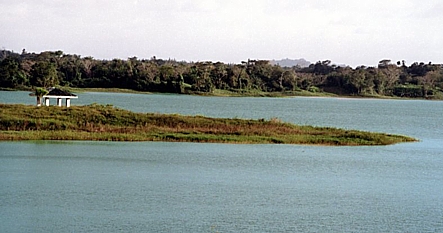
The Arena Reservoir
operated by the Water and Sewerage Authority (WASA) and located in the Arena Forest is a
good location for seeing water birds, especially the Black-bellied Whistling-Duck and
White-necked Heron. In addition to birdwatching you can picnic along the banks of the
reservoir but bathing is not allowed. In order to visit the dam, you must request
permission in advance from the WASA Public Relations Department located at the head office
on Farm Road in St. Joseph. Your request must state:
Place of Visit
Date of Visit
Vehicle(s) No(s)
Name(s) of Person(s) or Organization to be included on the pass
Number of proposed visitors
The Arena Forest
leading up to the entrance to the Arena Dam is a historic location as it was the site of a
violent and bloody confrontation between the Amerindians and the Spanish Capuchin priests
in 1699. Today it is possible to visit the site of the confrontation as explained
on our Other Places of Interest Page. In the forest you can find Yellow-rumped
Caciques, Piratic Flycatchers, Squirrel Cuckoo, Plumbeous Kite, White-tailed and
Violaceous Trogons, Lineated and Golden Olive Woodpeckers, Plain Ant Vireo and
White-bellied Antbird.
Toco is yet another of
those areas where houses seem to blend into the natural environment creating a situation
where birdwatching simply requires walking along and looking in the trees. In the Cumana area, every side road will reveal different species
especially during the early morning and evening hours.
The area known as the Caroni Swamp is located approximately 30 minutes outside
the capital city of Port of Spain and is a 15,000 acre area of marshland, mangrove swamp,
brackish and saline lagoons, and tidal mudflats. The area is home to over 186 species of
birds that includes cattle egrets, snowy egrets, ospreys, herons, plovers, and jacanas. In addition there are 32
species of bats, mammals including red howler monkeys and white-fronted capuchin monkeys,
along with various types of caimans. The highlight however of any visit to the Caroni
Swamp is the sight of the Scarlet Ibis coming in thousands to roost during the last two hours of
day light. Guided boat tours are available daily.
The Waterloo Mudflats are an easily accessible area in Central Trinidad, at the end of
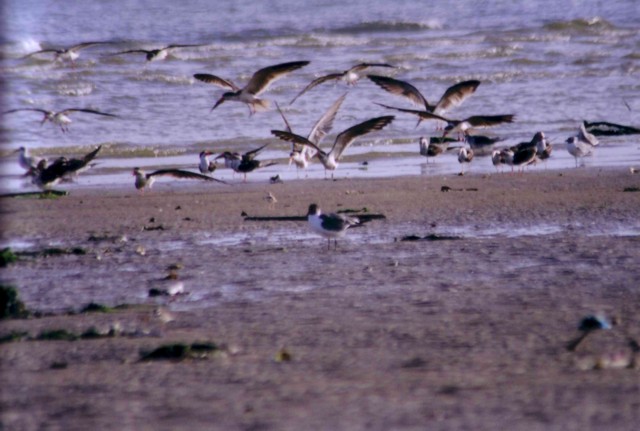
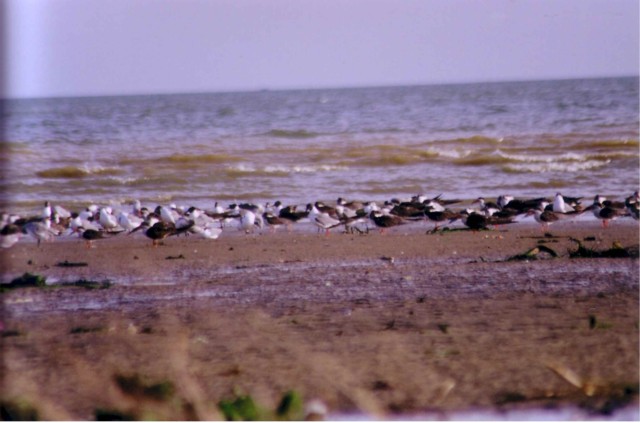
a main road. The various species that would be seen in this area include: Little Blue
Heron, Large-billed Terns, Ruddy Turnstone, Scarlet Ibis, Black Skimmers, Brown Pelicans, Blue-black Grassquit,
Laughing Gull. The area around the Temple
in the Sea is a good viewing area at low tide.
The Orange Valley Mudflats are an extension of the mudflats that stretch
along the western shore of Trinidad from Caroni to Point Lisas. Most
individuals who like birdwatching are familiar with the Waterloo
Mudflats, however the Orange Valley flats are actually better for
photographing birds as this is a birding hotspot for shore birds and there
is a stable viewing platform. To enable fishermen to get to their boats a
road has been built out into the bay and this road provides an excellent
area for walking out into the bay, so that at low tide you are sometimes
looking back at the birds with the mangrove as a backdrop. In addition the
road provides a firm dry location for viewing.
These mudflats attract a wide variety of sea shore birds and because of the
fringing mangrove also attract other birds. Among the species that can be
seen at Orange Valley are Black Skimmers, Laughing Gulls, Snowy Egrets,
Brown Pelicans, Little Blue Herons, Large Billed Terns, and Cormorants. At
low tide, one can sometimes see Scarlet Ibis feeding on the mudflats and in
the evenings roosting in the trees of the fringing mangrove. The highlight
of any visit to Orange Valley however would be to see the Flamingoes.
These birds are beautiful sight with their long neck and legs, thick curved
bills, rosy pink body while the young are grayish white in color.
Flamingoes are occasional visitors to Trinidad and come from Venezuela to
feed on small crustaceans along the shore line.
The
easiest route to Orange Valley is to take the road to Waterloo from the
Southern Main Road in Chase Village which allows you to combine your bird
watching with some sightseeing and view the Temple in the Sea, the
Hanooman Murti and the
Indo-Caribbean
Museum. Just before the
Temple in the Sea there is a road on the left that leads to Orange
Valley and as you enter Orange Valley you turn right on to Bay Road and
proceed to the sea.
La Vega is a good place
for bird watching. The varied habitat of forest, fruit orchards, freshwater
ponds encourages a variety of species. In the quiet of the early morning
there is a constant chirping from the trees, with small birds zipping past.
Lousade Pond and Lake George on the estate are
good spots for birding and between these two areas it is possible to see
over 22 different species of birds. You can learn more
about the estate in the La
Vega Estate section of our Other Places of Interest Page.
Located on the south-western tip of Trinidad, just seven miles from Venezuela, this
lagoon is an estuarine basin mangrove of approximately 330 hectares. While the entire peninsula is a bird watching
experience, there are three prime hotspots; Fullarton Swamp, Los Banquilles Swamp and the
Grand Icacos Lagoon. The Fullarton Swamp is ideal for the armchair birdwatcher. The road
from Fullarton Village to Icacos Village runs through the center of the Swamp and so it is
possible to literally view the birds without leaving your vehicle. The majority of wetland
species can be easily seen including Scarlet Ibis, Great Egret, Cattle Egret, Snowy Egret,
Pygmy Kingfisher, Yellow-headed blackbird, Wattled Jacana, Little Blue Heron, Tricoloured
Heron, Black-bellied Whistling Duck, Common Moorhen.
The Godineau river goes
through a variety of habitats, from saltwater mangrove swamp to fresh water
marshland to partially cultivated areas. A variety of birdlife can be seen
in this area including
Scarlet
Ibis, Southern
Lapwing,
Osprey,
Savannah Hawk, Wattled Jacana, Cattle Egret,
Yellow-hooded Blackbird, Lesser Yellowlegs,
Black-bellied Whistling Duck and a variety of migrating ducks (during
the northern winter).
The Wildfowl Trust, is a wildlife reserve, which encompasses two lakes and about 25
hectares of land within the Petrotrin petrochemical complex at Pointe-a-Pierre. The Trust
is actively involved in the research, breedingand the re-introduction of
endangered wetland birds into existing natural wildlife areas in Trinidad & Tobago.
The Trust has a Learning Center that houses information dealing with living organisms and
their habitats, an unique mollusk collection and a small but comprehensive Amerindian
Museum. A walk along the trails is a most relaxing experience and an opportunity to
closely observe wetland birds in their natural habitat. Some of the species that can be
seen include; Black Bellied Whistling Duck, White-faced Whistling Duck, Fulvous Whistling
Duck, White-Cheeked, Wild Muscovy Duck,
Olivaceous Cormorant, Anhinga, Purple Gallinule, Black-crowned Night Herons, Great Blue
Heron, Tri-coloured Heron, Common Moorhen.
As the Trust is located within a petrochemical complex, advance booking must be made
(usually the day before). There is a nominal entrance fee. There are not usually many
people on the grounds so it provides an excellent opportunity for photographers to capture
images of wild birds in a natural setting.
Nariva, on the east coast of Trinidad, is Trinidad and Tobago’s largest wetland
with some 32 square miles of fresh-water herbaceous swamp. It combines four major wetland types (mangrove swamp forest, palm forest, swamp
wood and freshwater marsh) and has been formally designated a Wetland of International
Importance under the Ramsar Convention. It includes the Bush Bush Wildlife Sanctuary and
Prohibited Area and the Nariva Mayaro Windbelt Forest Reserve. Entry is by permit only and
under restricted conditions.
Several rivers drain into the Nariva Swamp, including the Navet, Bois Neuf and
Guatacara. These lose their identity soon after entering the Nariva. The bulk of the water
drains from the area into the Atlantic through the short tidal Nariva River. The Nariva
Swamp can be deceptive in appearance as large areas are covered by grasses giving the
appearance of solid land when in fact the grasses merely cover the water surface. Only in
the southern sections are to be found irregularly-shaped patches of high ground, which are
really islands surrounded by the waters of the swamp. The largest of these islands is Bush
Bush Forest and further west an additional 11/2 miles lies another conspicuous patch of
high ground known as Bois Neuf island. On the various islands Moriche Palms, Royal Palms
and Palmiste (Cabbage Palms) grow in open stands.
Nariva is home to an incredibly diverse range of reptiles, mammals and birds, some of
which are rare and endangered. There are over 171 species of birds in Nariva, including manakins, tanagers, antbirds, caracara
and woodcreepers. There are 5 species of Parrots (including Macaws), 2 species of owls, 2 species
of trogons, 11 species of hummingbirds, potoos, toucans and limpkins. It is within Nariva
that the blue and gold macaws have been reintroduced to Trinidad. There are 59 species of
mammals that can be found in Nariva including red howler and capuchin ( Cebus albifrons)
monkeys, deer, porcupine, three-toed and silky anteaters and opossums. Trinidad's last
surviving colony of the West Indian Manatee are located within Nariva. Also to be found in
Nariva are various reptiles that include giant anaconda, the fer-de-lance snake and caiman.
Kernahan Trace
In close proximity to the Nariva Swamp is
Kernahan Trace, the entrance to which is along the
Manzanilla Road. As the roadway is bordered by flooded pastures,
it provides the opportunity to view Purple Gallinule, White-headed
Marsh-Tyrant, Ringed Kingfisher, Little Blue Heron and Yellow Hooded Blackbird. In the hillside areas where watermelon are grown can be seen Southern
Lapwing, Savannah Hawk, Tropical Kingbird.
The Adventure Farm & Eco Reserve is just outside the village of Plymouth on the
Arnos Vale Road. The farm is planted with a variety of fruit trees but parts of the farm
have been left with the natural tropical vegetation. There is one main trail that winds
through the property. A variety of birds can be seen on the Farm including Tropical
Mockingbirds, Blue-crowned Motmot, White-tipped Dove, Eared Dove, White-necked Jacobin,
Rufous-breasted Hermit, Ruby-topaz Hummingbird, Bared-eyed Thrush, White-lined Tanagers,
Blue-Gray Tanagers, Blue-black Grassquit, Bananaquit, Pale-vented Pigeon and Woodcreepers.
The owners of the Farm live on the property and there is an entrance fee of TT $20. An
interesting feature of the farm is that visitors can place fruit and seeds in the feeders,
then ring a brass bell. Within minutes of ringing the bell various species come to the
feeders. Along the side of the main house are hummingbird feeders with the hummingbirds
ever-present.
This is a former cocoa and coconut estate that was destroyed by Hurricane Flora in 1963
and as a result was converted into a wildlife sanctuary.
It is approximately 200 acres in size
and is covered in secondary forest. It is located along Grafton Road on the southern side
of the road. There is a small weathered sign indicating the entrance to the sanctuary and
a short uphill secondary road that leads to the reserve. Even before one reaches the
reserve, along the entrance road there is good birding. A restaurant was previously
operated on the site but is now closed, however the restaurant building still exists with
tables and benches and can be used for resting during the day. There are toilets in the
building that are maintained. There are three main forest trails. As you enter, the
first trail on the right leads downhill and is relatively short. The second trail on the
left also gradually leads downhill and then eventually climbs uphill. The main trail,
which is directly facing the entrance, leads uphill and winds past several abandoned
estate buildings and stables.
The wetlands lie just north of Milford road and adjacent to Pigeon
Point. They offered a range of habitats from mangroves fringing the Bon Accord lagoon, to
freshwater marsh, drainage channels and four large ponds in the water treatment works. It
is an excellent site for waterbirds and waders especially. At the water treatment ponds
can usually be seen Great Egrets, Anhingas, Black-crowned
Night-herons, Tricoloured
Herons, Green Herons, Snowy Egret, Little Egrets, Cattle Egrets, Black-bellied
Whistling-ducks, White-cheeked Pintails, Least Grebe.
Some other notable birding spots in Trinidad and Tobago include:
While the above are the popular birding hotspots, Trinidad truly abounds with birds and
many of the popular vacation and picnic areas also provide the opportunity to engage in
birdwatching of various species.
All photographs (unless otherwise stated) are the property of Brian
Ramsey. None of the photographs may be reproduced without the express written
consent of Outdoor
Business Group Limited
and Brian Ramsey.